Monday, February 29, 2016

Negative Effects of the Internet

1. Children, young adults and even adults get addicted to games online
Online games can be addictive to children, young adults and even adults. This can rob away precious time which otherwise should have been used for something more productive

2. Loss of the human touch
People absorbed in their activities online tend to forget that there are real people in their surroundings who need their attention or have socialization needs. Social networking gives more importance to virtual friends than real ones.
Unsuspecting internet users can fall victim to criminal elements who meddle with their emails or do something nasty with their credit card information. Phishing or fooling other people into believing that criminal-owned websites are legitimate led to millions of money lost to misleading business transactions.

3 Criminal elements use information to advance their malicious intents
Unsuspecting internet users can fall victim to criminal elements who meddle with their emails or do something nasty with their credit card information. Phishing or fooling other people into believing that criminal-owned websites are legitimate led to millions of money lost to misleading business transactions.

4. Abandonment of family
In one instance, a couple in Korea was preoccupied with their virtual baby forgetting to feed their real baby who died of hunger. People become insensitive as they are absorbed by the hidden hand of the internet into its lair.


Sunday, February 21, 2016

5 Ways to Build Relationships with Colleagues

1. It is easier to do research
Before electronic means of gathering information, students or researchers need to pay a visit to libraries to access materials relevant to their research topics. Nowadays, it will take just a subscription to a journal online or just browsing online to search for literature required to develop one’s conceptual framework. Preparing the review of literature is easier and faster. Thus, more research gets published and knowledge generation is greatly facilitated.

2. Communication with family, friends and relatives is faster
Gone are the homesick days because a son or daughter can now easily contact their parents online. Services such as that of Skype and Gmail enable a loved one to communicate with another in almost any part of the globe where internet services are available.

3. There is a great possibility to earn while working from home
It is now possible to earn online through writing, filling up forms, or even just clicking away on advertisements in the internet. Information is a valuable thing that people are willing to pay. Through advertisements posted online, manufacturers and sellers are able to increase the possibility of having their products purchased.

4. Faster business transactions and cheaper products
Sellers and buyers can now transact through online paying facilities like Paypal or credit cards. Buyers can surf online and select the products they want to buy. There is no need to have a physical store to maintain as the products can be shipped directly from the factory.

5. Savings on travel cost
Through the use of the internet, it is possible for executives or business managers to do teleconferencing. They do not need to meet physically just to discuss matters. This could save a lot on travel cost.


Sunday, February 14, 2016

Tips for Maintaining a Healthy Work-Life Balance

As a working professional, you have to learn the value of work-life balance. It’s not true that, in order to become successful in your career, you have to compromise your personal life. If you really want to live a happy, contented, successful, and stress-free life, you only have to master one thing: BALANCE.

If you know how to apply balance in your career and personal life, then you know how to work smarter not just harder.

They say knowing your priorities, having good time management, and having strong drive to reach all of your goals are all the things that you should do in order to achieve work-life balance. Yes, these are all important in having a well-balanced life. But aside from these common or usual tips, there are more things that you can do to avoid experiencing job burnout and have an extra time to do other activities. Here are a few tips for maintaining a healthy work-life balance:

1. Refocus Your Priorities

Each of us has his own priorities. In the workplace, some people focuses on getting a lot of benefits from doing a job well. Their main priority is to earn money, more money, and get a promotion. If this is the main reason why you are spending most of your time in the office or in your business, then you are leading into a wrong path. No matter how hard you work, or how much time you invest in your job or career, if your intention or purpose is not good, it will eventually lead to failure and job burnout.

2. Make Your Career Your Friend

You chose to venture into the business or field you’re in now because it’s where your skills fit and you love to do it, right? This may sound as an old cliché, but it’s one thing everyone should always remember: doing what you love will never feel like work.
The reason many employees or workers hate their jobs is because they treat it as their enemy. They don’t enjoy doing it and they complain every time things aren’t going their way. If you don’t like this exhausting and stressful lifestyle, then you should treat your job as your friend. Seek out tasks and discover new things. Enjoy everything about it because if you do, you will never feel tired and stress.

3. Don’t Let Work Dictate Your Level of Commitment

Some people depend their level of commitment to the amount of work that they’ve accomplished. This should not be the case. As a professional, you must learn to set some boundaries between work and social life. Your job is not forever, but your relationships with people and things will last a lifetime. Don’t give all of your time to your clients or customers. Your family and friends also deserve at least some of your precious time.

 4. Respect Your “Me” Time

Respect your private time in the same way you respect your clients or co-workers time. If you set a time for yourself or for your family, try your best not to take home work. Give yourself enough time to rest and sleep. You need it in order to become more productive and focus in things that you do.


Sunday, February 7, 2016

5 Ways to Build Relationships with Colleagues

Because everyone has their role to play in a company, it is important for everyone to get along – not just for the sake of the work environment, but for the sake of the company and its success, too. But how do you build relationships with co-workers to begin with? Here are five ways:

1. Be Honest and Communicate
To encourage people to be honest with their co-workers about having a social relationship and communicate that you want to get to know them better in order to work better as a team.
“Some people see work as a place to show up, do what they are supposed to do, and go home”. “Others see it as a place to spend half of their waking life and an opportunity to build social relationships.”

2. Be Likable
Sometimes being open and honest about building a relationship with your co-worker won’t get you the response you are looking for. However, don’t completely write-off someone who isn’t interested in building a relationship.
“Even if they don’t want to engage and build a friendly or social relationship, you may end up excluding them or devaluing them, and that ends up creating a negative relationship and possibly hurting the company”. “Instead, be sure to keep them in the communication loop and still offer assistance and support to work-related tasks.”

3. Be Observant
Some people might know an appropriate way to build a good relationship with a fellow employee.
“Encourage individuals to take a look at the company’s culture and use that as one of the factors to inform their decision regarding if and how to engage co-workers outside of regular work activities”.
If you’re unsure about inviting a co-worker to grab some dinner after work, or go out for a run over the weekend, why not start small and ask them out to lunch? You don’t have a whole lot to lose and, if you have a good time, it can become a regular thing and help you grow as co-workers.

4. Find A Common Interest
For some, it can be a little awkward to get to know a complete stranger. However, points out that at one point most of the people who you consider close friends were strangers to us at one point. This can provide some relief if you are feeling uneasy about befriending a co-worker you don’t know.
“Another way to make this a little easier is to focus on an interest you both have in common”. “Perhaps you both own dogs, went to the same college, watch the same TV show. This common interest can be a good foundation for a positive relationship.”

5. Don’t Be Afraid to Aim a Little Higher (Or Lower)
Though it might be easier to build a relationship with a co-worker who holds the same working status as you, it doesn’t mean you can’t try to build a relationship with a co-worker who outranks you – or even one you outrank – in the company.


Monday, February 1, 2016

Benefits of Effective Communication in the Workplace

Effective verbal and nonverbal communication skills are valuable in the workplace. Some companies spend a lot of money to train their employees on how to effectively communicate. Good communication skills go beyond conversations, but employees must know how to communicate well in written reports and emails. Understanding the benefits of effective communication helps companies place a focus on developing a workforce that is able to communicate within the firm and with customers, vendors and international business partners.

Helps with Diversity
Effective workplace communication is important in companies with workplace diversity. Good communication skills help to reduce the barriers erected because of language and cultural differences. Companies that provide communication training to domestic and international employees reap the benefits of effective workplace communication. Companies can avoid cultural confusion and miscommunication by training international employers early in their careers and on a regular basis. Effective communication causes productivity to increase, errors to decrease and operations to run smoother.

Global Business
With global business transactions continually increasing, the need for effective communication to meet global demands is also increasing. Managers and employees must know how to effectively communicate with the company's international counterparts. The difference in cultures requires managers to understand terms commonly used in America that another culture finds offensive. Companies that prepare workers to excel with verbal and nonverbal communications skills find it easier to enter into global marketplaces than companies that do not prepare its employees. Effective communication is important for businesses looking to expand beyond its domestic borders.

Team Building
Effective communication in the workplace helps employees and managers form highly efficient teams. Employees are able to trust each other and management. Effective communication reduces unnecessary competition within departments and helps employees work together harmoniously. The result of a team that works together is high productivity, integrity and responsibility. Employees know their roles on the team and know they are valued. Managers are able to correct employees' mistakes without creating a hostile work environment. A manager who openly communicates with his subordinates can foster positive relationships that benefit the company as a whole.

Employee Morale
An improvement in employee morale can result from effective communication. Although pay is a concern for many workers, it is not their only concern. Employees appreciate good communication coming from management. It produces a healthy work environment. When employees are satisfied with their jobs, they are able to efficiently perform their duties with a positive attitude. Failing to communicate effectively in a workplace leads to frustration and confusion among employees. However, managers can alleviate such problems by keeping the lines of communication open.


Sunday, January 24, 2016

Identify the Family Rules

Identify and clearly define the rules that are important for your family. Family rules may be specific to a situation, like dinner time rules, or they can be specific to behaviors that are never okay, like running in the house, hitting a sibling, or jumping on furniture. Family rules should be important enough that you have no problem consistently enforcing them.

When you first start using family rules, you may need to choose which problem behaviors to address first. Toddlers and preschoolers can only learn and remember two to three rules at any one time. It is also hard for parents to consistently enforce lots of new rules. It is a good idea to start with just one rule and add new rules as needed over time. This gives children a chance to learn a rule and how family rules work before others are added.

Rules are easier to follow when they are clear, exact, and can be easily explained to your child. Family rules focus on one specific behavior at a time. Avoid vague rules, such as “be good.” “Be good” includes many different things and could be hard for a child to understand and do. A more specific rule would be “Talk nicely to others.”

Family rules also should be realistic and fit your child’s age. The rule should be something that your toddler and preschooler can obey. Other approaches may work better than family rules for minor behavior problems or misbehaviors that do not occur often.


Sunday, January 17, 2016

Developmental Milestones Preschooler

Skills such as naming colors, showing affection, and hopping on one foot are called developmental milestones. Developmental milestones are things most children can do by a certain age. Children reach milestones in how they play, learn, speak, behave, and move (like crawling, walking, or jumping).
As children grow into early childhood, their world will begin to open up. They will become more independent and begin to focus more on adults and children outside of the family. They will want to explore and ask about the things around them even more. Their interactions with family and those around them will help to shape their personality and their own ways of thinking and moving. During this stage, children should be able to ride a tricycle, use safety scissors, notice a difference between girls and boys, help to dress and undress themselves, play with other children, recall part of a story, and sing a song.
Positive Parenting Tips
Following are some of the things you, as a parent, can do to help your pre-schooler during this time:
  • Continue to read to your child. Nurture her love for books by taking her to the library or bookstore.
  • Let your child help with simple chores.
  •  Encourage your child to play with other children. This helps him to learn the value of sharing and friendship.
  • Be clear and consistent when disciplining your child. Explain and show the behavior that you expect from her. Whenever you tell her no, follow up with what he should be doing instead.
  • Help your child develop good language skills by speaking to him in complete sentences and using "grown up" words. Help him to use the correct words and phrases.
  •  Help your child through the steps to solve problems when she is upset.
  • Give your child a limited number of simple choices (for example, deciding what to wear, when to play, and what to eat for snack.

Sunday, January 10, 2016

Child Safety First of Infant 0-1 years old

When a baby becomes part of your family, it is time to make sure that your home is a safe place. Look around your home for things that could be dangerous to your baby. As a parent, it is your job to ensure that you create a safe home for your baby. It also is important that you take the necessary steps to make sure that you are mentally and emotionally ready for your new baby. Here are a few tips to keep your baby safe:
  • Do not shake your baby―ever! Babies have very weak neck muscles that are not yet able to support their heads. If you shake your baby, you can damage his brain or even cause his death.
  • Make sure you always put your baby to sleep on her back to prevent sudden infant death syndrome (commonly known as SIDS).
  • Protect your baby and family from secondhand smoke. Do not allow anyone to smoke in your home.
  • Place your baby in a rear-facing car seat in the back seat while he is riding in a car. This is recommended by the National Highway Traffic Safety Administration.
  • Prevent your baby from choking by cutting her food into small bites. Also, don’t let her play with small toys and other things that might be easy for her to swallow.
  • Don’t allow your baby to play with anything that might cover her face.
  • Never carry hot liquids or foods near your baby or while holding him.
  • Vaccines (shots) are important to protect your child’s health and safety. Because children can get serious diseases, it is important that your child get the right shots at the right time. Talk with your child’s doctor to make sure that your child is up-to-date on her vaccinations.


Sunday, January 3, 2016

EduHub Investment

EduHub Investment is a Dubai-based education company that specializes in empowering schools via financial management and delivering specialized educational services to foster student success.
EduHub has proven history of providing high value education. We have the expertise to provide specific solutions to educational institution and to support our commitment to providing cost effective, high-quality management and consultancy. This ability, combined with our experience and unparalleled support in the UAE education community, assures our customers the right solution at the right cost. 

Vision
Our vision to establish an innovative and creative company in the field of educational investment and consultancy that inspires educators and community leaders in the Arabian Gulf Area and worldwide.

Mission
Our mission is to effectively invest in advanced technology-equipped institutes that adopt the latest educational methods and learning approaches. We aspire to provide a complete range of consultancy and management services that will guide clients through every stage of the process, from school start-up and investment to ongoing management. We achieve our mission through our commitment to our clients and shareholders, guided by our values.


Sunday, December 27, 2015

Guidelines for Parent/Child Communication

Good communication is an important parenting skill. Parenting can be more enjoyable when positive parent – child relationship is established. Whether you are parenting a toddler or a teenager, good communication is the key to building self-esteem as well a mutual respect.

Basic Principles of Good Parent/Child Communication

  •  Let the child know that you are interested and involved and that you will help when needed.
  • Turn off the television or put the newspaper down when your child wants to converse.
  • Avoid taking a telephone call when the child has something important to tell you.
  • Unless other people are specifically meant to be included, hold conversations in privacy. The  best communication between you and the child will occur when others are not around.
  • Embarrassing the child or putting him on the spot in front of others will lead only to  resentment and hostility, not good communication.
  • Don’t tower over your child. Physically get down to the child’s level then talk.
  • If you are very angry about a behavior or an incident, don’t attempt communications until you  regain your cool, because you cannot be objective until then. It is better to stop, settle down,  and talk to the child later.
  •  If you are very tired, you will have to make an extra effort to be an active listener. Genuine active listening is hard work and is very difficult when your mind and body are already tired.
  • Listen carefully and politely. Don’t interrupt the child when he is trying to tell his story. Be as courteous to your child as you would be to your best friend.


Monday, December 21, 2015

Tips for Beginning Child Care Providers

1.    Learn from others. Listen to more experienced mentors. Observe how they handle disruptive situations. Watch how they diffuse a tense situation.

2.    Expect great things to happen. Be excited about your work each day. A child’s first teacher is often the one he or she remembers the most. You could be that person in the life of the children you teach.

3.    Learn to be flexible. Although young children need a consistent schedule, allow for the unexpected. What if snow starts falling? Or, a bulldozer is working nearby? Or, a helicopter hovers overhead? Make use of these teachable moments.

4.    Leave personal problems at home. Begin each day with a warm, friendly greeting for each child who enters your program. Tuck personal problems away until later. A smile reassures parents that you will care for their child until they return.

5.    Maintain a clean, safe environment. Is your program one in which you would want your own child to spend the day? Look around. Make a list of potential hazards. Prevention could keep an accident from happening.

6.    Respect individual differences in each child. Realize that each child has a different learning style. Some children learn the best in a visual mode, such as watching a demonstration. Others learn in an auditory mode, such as listening to instruction. Still others learn best in a kinesthetic style which includes using the hands to feel, touch, and explore. Research shows that teachers usually teach in the mode in which they learn best. Evaluate each child and find his or her best learning style.

7.    Develop a primary bonding process. Some of your children may be from homeless shelters or dysfunctional families. They may exhibit aggressive behavior, signs of withdrawal, or disruptive conduct. Realize that a structured environment, consistent daily routine, and shared control between adult and child are critical to the distressed child to take ownership of their learning.


Sunday, December 13, 2015

Sing songs with your child and build in opportunities for him to take turns

Sing simple songs with your child, especially ones with actions, like “Row Row Row your Boat”, and build in opportunities for him to participate. This is a fun way for him to learn to take his turn in an interaction, as well as to learn new words.

Sing a new song the same way a few times so your child learns the song and its “high point”. High points are the most interesting parts of a song. In “Row, Row, Row your Boat”, the high points are the rocking back and forth while you and your child sit on the floor, holding outstretched hands, and saying the last word after a long pause – i.e., “dream”.

Once your child is familiar with the song, pause before a high point and wait for him to respond.
For example, when singing “Row Row Row your Boat”, sing the song through once or twice and then, still holding his hands, WAIT for him to ask you to sing it again (he will probably make a sound or rock back and forth to ask you to do it again).

Or, you can start to sing the song while rocking back and forth, pausing mid-song so he can ask you to continue.

Or, you can slow down and pause before the last word (“dream”), so he can make a sound - any sound - to end the song.

To take his turn during songs, your child may wriggle, make a sound, look at you, point to something or perform an action. Accept anything as his turn and then continue immediately. The most important thing is that he takes a turn and has fun while doing it.


Monday, December 7, 2015

Tips to help parents pick the best preschool

1. Make sure that the ABCs and 123s are a key part of the school's learning goals.
Early reading, for example, is a predictor of later success in life, so being able to get ahead or catch up in preschool is key. We know focus on cognitive areas such as ABCs and 123s matters enormously. For example, how well a child reads at the end of first grade predicts how well they read in later grades, graduation rates and even their income level as an adult. The very best preschools help ready children advance beyond age norms, but they also nurture children who are behind so they catch up in these early years. 
2. Ask how "play" is woven into the day, particularly imaginative and physical play. 
It might seem counter to the first tip about reading and math. Most parents assume if there is a focus on ABCs and 123s, it is drill and kill, and there is little room for play. Great preschools do both, and success in the early years of a child's education often allows children opportunities to explore the building blocks of literacy and math through play.
Other kinds of play are just essential as well. Imaginative play, for example. Some form of daily "pretend play" improves emotional/behavioral skills. And emotional/behavioral skills predict academic performance later. When you visit the school, look for a costume corner, art up on the walls, pretend kitchen sets and pairs or small groups of children working together creating and collaborating.
Some sort of physical play helping children develop gross motor skills matters, too. There is a direct correlation between the gross motor skill development of a pre-schooler and long-term health. Ask whether outside play is a part of a typical day. And also observe when you visit the school if there is room for kids to run around. Does the school have a climbing structure, tricycles, and balls for children to throw?

3. Ask if children are able to choose some of their activities during the day.
Studies show that children who get to choose some activities preschool have better life outcomes. Studies show that when children have the chance to make choices at the tender age of 3 or 4, rather than having all dictated by teacher, they have better long term social and life outcomes on a variety of measures.
So, while you want to be sure that there are a variety of materials designed to help kids with literacy, math, time — and — space, and science skills, for example, you also want to be sure that the day is peppered with opportunities for your child to choose his own activities, and is not simply teacher-led instruction. Looking at a school's schedule can be quite useful on this. See if there are windows of time that are dedicated to play and/or if there are stations where children are able to choose what to do.
4. Look for close alignment with "home values."
The way the school handles social and emotional issues should be similar to your approach at home. Consistency for preschool age children is essential in helping them develop. One way to learn more about the school's approach is to ask the teachers or director a role playing scenario. You might ask if two children always played together and one day one of the two decides to play with another child and leaves his friend behind, how the teacher might handle that situation. And then think about whether that approach is the same one you would have taken.

Sunday, November 29, 2015

Tips For Buying Children’s Books

Books are the best friends for everyone but the importance of a book gets doubled when we are concerned about giving the right direction to the life of our loved ones. A book is valuable for the mental growth of your child. Good and inspiring books not only enhance the cognitive abilities of a child but also spur his emotional, social, moral and spiritual growth.

It is very difficult to select a book to gift to your child because children usually don’t like to read books. They love games and toys. So if you are going to plan a book you should keep certain thinks in mind. First is the age of your child. If your child is in the 4-8 year age group, you can gift him picture books. If he is of the 8-10 age group, storybooks of gallantry can serve as a magnet for his curiosity. If your child is in the teen age you should gift him a book of motivational stories, which also contain emotional aspects related to his age.  The context of the book should appeal to a child’s mind.

The title page of the book should be attractive and colorful. You should also peep into the introductory page and the content page before buying a book for your champ. Don’t buy a book by looking at just the cover page. You should also keep in mind the author of the book. Maybe your child is fond of some particular author. Have a preference to buy book of such authors.
You should also spare some time to read the abstract of the book. It will give you an idea about the theme of the book, quality of content, and language of the book. Don’t buy books of hard language because if your child needs a dictionary to understand the language of the story it will become too dull an activity for him. The language should also not be too easy.

You should flip through the book. The font size of the letters should be of moderate size. Spacing of the pages should be harmonious in nature. If the size and spacing is good, the book will without doubt be systematic in nature and will compel your child to read it thoroughly. You should also check the pictures of the book. These should be pleasant and ideal.

But you should keep in mind that the subjective appeal of the book should not depend upon your choice. Children should be encouraged to enjoy reading and you can only do this by buying books that satisfy the psychology of kids. If your child is good in sports and you are buying books of history for him, these books will not at all be beneficial.  You can surely gift him books of different tastes occasionally.

Books play a healthy role in deciding the future of a child. Gift him books of that field in which you want to see him on the peak.


Sunday, November 22, 2015

Importance Of Reading Books Aloud To Your Child

Babies learn from each and every activity of the parents. Even small kids who are unable to understand language often understand the tone of the person addressing them. If one looks to the child angrily the child will start weeping. Similarly, if you are talking to the child or reading a book loudly, the child may not understand the contents or what you are saying, but will learn from the parent’s voice and expressions. It can be rightly said that reading a book aloud is not wasting time. A child does try to pay attention to what you are reading, and also tries to understand the tone in which you are reading. This way the child will learn to obey your directions.

As the child grows up, the understanding of the way you turn the page or move the eyeballs will help him improve concentration and understand the pleasure of reading. A child is bound to develop love for reading books, and will enjoy reading  books himself. If the book has pictures, the child will try to identify the objects or colors. Even if the book is without photographs teach the child to move his finger along with you and turn the page. This is bound to improve concentration.

It is essential to fix some reading time every day. At that time sit down with a book and make your child sit and listen. The child will develop enthusiasm and excitement in reading which will be helpful when he grows up and start studies. Even if you are yourself not interested in reading, ensure that in the presence of the child your non liking for reading is not displayed. Otherwise, the child is bound to develop a feeling  that his mom is not interested in reading and it will be ok for him to follow, as the child tends to learn the most from parents. In case of difficulty on your part get some audio book from the computer or internet, start playing it and let the child listen to the same.

Reading helps the child to develop communication and language. Also verbal communication between mother and child will result in development of better understanding between parents and children. If the child is able to develop these skills at an early age it will be of great help to him in his later life. When grown up he or she will be able to achieve better place in society and at work place.


Sunday, November 15, 2015

What Is The Importance Of Preschool Library?

Reading is a good habit. A child learns a lot when he sees pictures in the books. A child often raises a series of questions when he sees something interesting in books. Even if we answer all his questions we can’t satisfy him because his imagination is much wider than us.

Parents are the first teacher of a child. Child learns his first lesson from his mother. So you should spend a good quality time with your child. Encourage him to read books. If you read something in front of him, he also asks for that book. Children are good imitators. You should develop reading habit for your child’s better future. As we all know, good books are the best friends.
A preschool library is the latest phenomenon in child education. It includes many pictorial books related to alphabets, poems, numbers, shapes, colors, vegetables, animals, body parts, activities etc. It provides a wide range of books to your child and this develops his interest in reading. You can read stories to him from books. You can also create new stories with the help of pictures in the bookChildren learn many activities from books.
You don’t need special place for a preschool library. Just create some place in your own library and make a child section in it. While choosing books the age of the child should be kept in mind. Books should be of an appealing nature. Children must enjoy the books and so these should be of his interest.
A preschool library also helps teachers to make effective lesson plans. Students enjoy those lessons in which teachers use visual aids. The new ideas of making study effective also come from books available in the preschool library.
To teach student alphabets and other activities, stories and pictures can be used. There are so many story and rhyme books that play a primary role in child education by using alphabets or number themes like one- two, buckle my shoe; three- four, shut the door and so on.
Teachers should repeat each and every alphabet or number in different ways with the help of different pictures. It helps a child to make association between activity, alphabet, preschool craft and lesson. One of the best benefits of using a preschool library is that you can integrate many additional areas of learning. Your imagination also plays an important role in tailoring your theme by using visual aids.

It is the first 5 years in which your child learns a lot. With the help of a preschool library you can expand his vocabulary as well as his knowledge. Children books were very popular in old days when we were children. But the concept of preschool library is totally new. My child is only three years old but he has his library card to get books issued form his school.


Sunday, November 8, 2015

Tips for Buying Children's Apps

The good news is that apps are a promising educational tool that support literacy, math, science and life skills. The challenge for parents is how to choose the right app for their child.
These tips can help guide your decision:

1.  A good app is the perfect combination of education and entertainment.
When kids are engaged, they learn.  Educational apps balance engagement with learning. 
Whether an app is focused on teaching math skills or science, it is really important that a child has opportunities to play and do something new.
The characters will be familiar, but the game play will be new and challenging, which is a good formula for learning.

2.  Explore and play with your child.
Research shows that kids learn more when parents join in the fun – this is true for all media.
Take an active role by choosing an app and deciding why it’s likely to hold your child’s attention. Don’t be bashful about playing with your child, taking turns with who gets to control the screen and select the next level.
           
3.  Select games that are developmentally appropriate for your child.
Is the app right for your child and what they can do? Not all 4-year-olds are created equal, so different apps will appeal to different children at different times.
Ask yourself, is this a skill or storyline my child is capable of following right now?
Touch screen technology is a significant advance in technology for young children – it’s easy and intuitive for kids to navigate.  For pre-readers, make sure there are audio cues and not just words on a screen.

4.  Set limits and encourage other forms of learning and play.          
This is about setting the right “media diet” for your child. A balanced media diet is like a balanced food diet; variety is healthier.
It’s also good to think about the number of hours your child is spending in front of screens.
One possible rule is that there is no TV until homework is done. The same rules apply to newer screens, unless the device is used for schoolwork, which is happening more and more these days.
           
5.  Select apps from trusted, reliable sources.
Look for established, trusted educational brands that are known for producing educational content.
Are you comfortable with the app’s characters as role models for your children? Kids tend to imitate characters in the media. Make sure the characters, their language, and their behavior is something you’d be comfortable with from your own children. Also, avoid apps that could be frightening or that use violence to resolve conflicts.
Talk to other parents about the apps their children enjoy, and why.  Ask them if you can test their app before you buy it for your child.
           

Review ratings and reviews – by other parents, and on sites like Common Sense Media – and look at the apps that have received Parent’s Choice awards.


Sunday, November 1, 2015

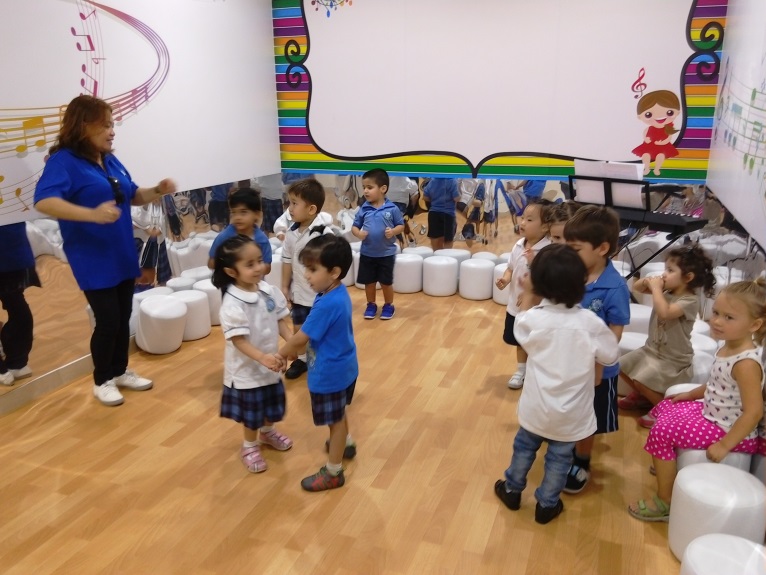
Reasons Why Music Is So Important For Toddlers' Development

Whether it’s listening, dancing, singing or all of the above, we try to have lots of music opportunities in our house on a daily basis.
It’s a good thing. It often puts the kids in a great mood, and as it turns out, it’s also brain food!
Here are some reasons why music should be a daily part of your toddlers’ lives!
1. It increases their sensory development: Hearing a variety of sounds allows them to make more connections in their brains.
2. It’s a mood lifter:  Is your toddler having a tantrum? Music could help turn that around.
3. Music can be soothing: Right before bedtime, try turning on some relaxing music to set the tone that it’s time to wind down.
4. Music helps build literacy:  Songs introduce kids to a variety of words, thus increasing their vocabulary. It also helps them to learn letters and numbers.
5. Music builds rhythm and develops coordination. Need I say, more?

Sunday, October 25, 2015

Developing Social Skills through Individual and Family Therapy

Many children and adolescents who present for mental health services experience difficulties in their peer relationships. They may encounter problems making and keeping friends, have trouble noticing social cues, or have a hard time expressing themselves. Both individual and family therapy can assist children and teens to gain skills for navigating their interpersonal environments. Therapists may help kids to develop their social skills via a number of methods:

–By helping them recognize positive and negative social influences
Therapists may work with children to sketch drawings or diagrams that map out their social worlds, and identify how they feel about certain people or groups of people.

–By developing plans with them to maximize positive social influences Therapists might make concrete plans with children about what they could do to improve their social environment, such as “call Steve”, “join the boy scouts” or “avoid Sarah”.

–By helping them identify and manage their feelings about interpersonal events
Therapists can help kids identify their feelings about social situations, and also help them cope with these feelings. For example, a child may express that he or she feels hurt or angry that another child has teased him, and a therapist may help a child to express his feelings through words, art, or play.

—By helping kids identify courses of action they might take in response to negative events
In the instance of teasing, a therapist might help a child to decide to limit contact or speak up to the bully, or if physically threatened, to go to a responsible adult for assistance.

–By helping children develop general techniques for making friends, getting along with others, and getting their needs met Therapists might use role-plays, drawings, fantasy play, or specially designed therapeutic board games to help children develop various social skills. The skills that therapists might help children to develop might include: making requests, registering complaints, asking for help, resisting peer pressure, making and accepting compliments, and entering a group of children who are already playing or talking together.


Sunday, October 18, 2015

Reducing family stress around life changes, big and small

We often think about how children have difficulty with changes around these times.  But transitions are difficult for parents too, as well as for families as a whole.  It is often hard work for everyone to move from the lazy days of summer vacation to the frenetic activity that autumn brings.
The good news is that transitions – big and small — are also opportunities for positive learning if we are able to manage them successfully.
Putting the following three tips into practice can help:

1. Maintain consistent routines.  Most families have routines and rituals around daily activities such as getting ready to leave the house and going to bed at night.  During a time of change, continuing these routines can provide helpful structure.  (If your family hasn’t established such routines, this would be a good time to do so!)  It can be especially difficult to maintain routines as children stressed by change often test their parents’ capacity to stick with limits, for example, by resisting going to bed at the usual time and declining to do homework when reminded.  This testing behavior, though frustrating and at times exhausting, is actually a child’s way of wondering just how much in their lives is going to change. By maintaining consistent routines and familiar rituals, parents let their children know that there is a limit to the amount of change that is occurring and that they, the parents, are still in charge.  Parents also benefit from the household running as smoothly as possible amid changes.  At the same time, it is important not to be too rigid; allowing some flexibility within the structure of the routine is necessary in order to give children the feeling that they can begin to have some of their own power within the family.

2. Prepare for upcoming changes. For example, helping a child picture what will unfold the first day of dance class and even driving by the studio ahead of time will provide a degree of comfort about starting something new.  For a parent, these sorts of discussions provide an important window into what is going on inside of the child’s mind at a time of great change. Preparation can also help on a very “micro” level.  For example, giving a child who is resisting getting ready to leave the house a five-minute warning before having to put shoes on may avoid 15 minutes of conflict.

3. Allow for a wide range of emotional reactions. Changes can cause an array of mixed feelings, and children need to feel that this mix of feelings is ok. Rather than trying to immediately assuage a child’s sadness about missing her old house by saying “But your new room is so much bigger!” a parent might first say to the child, “Your old room was very special.”  This type of mirroring can let children know that it’s ok to be sad, angry, and excited about the changes in their lives.  It is important for parents to support each other as well, to help reduce the stress they are likely to experience from managing their own mixed feelings about the changes that are occurring as well as their responses to limits being tested. Having support will improve parents’ ability to recognize and make room for their children’s feelings about transitions.